Untitled (1974)
Gillian AyresUntitled by Gillian Ayres is an evocative artwork that combines vibrant colour, intricate patterns, and an enigmatic sense of space. Known for her dynamic approach to abstraction and her fearless use of colour, Ayres presents a piece that explores the interplay between structure and organic form.
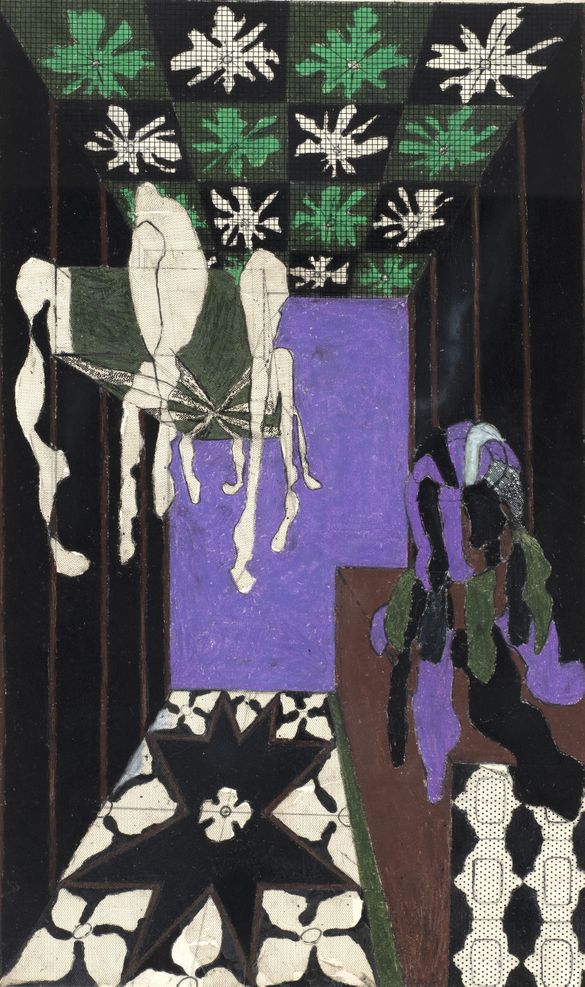
The composition is defined by its theatrical perspective, leading the viewer into a vividly patterned room. The ceiling is adorned with a grid of green and white motifs resembling leaves, which contrast with the dark background and evoke a sense of rhythm and symmetry. Below, the black-and-white tiled floor features bold floral-like patterns that mirror the structured yet decorative theme of the ceiling. Together, these elements create a space that feels both immersive and otherworldly.
At the center of the scene, an ambiguous form hangs or drapes, rendered in a pale, ghostly white with intricate detailing. This object’s organic, almost skeletal quality contrasts with the geometric rigour of the surrounding patterns, adding a sense of mystery and movement. To the right, another organic form cascades from a plinth-like structure, its rich hues of green, purple, and brown introducing texture and fluidity to the composition. These elements suggest a tension between control and spontaneity, a hallmark of Ayres’ work.
Ayres’ use of colour is both striking and harmonious. The interplay of green, purple, black, and white creates a rich visual dialogue, while her bold lines and detailed textures guide the viewer’s eye through the composition. The layering of patterns and forms invites repeated exploration, revealing new details with each viewing.
Untitled by Gillian Ayres is an evocative artwork that combines vibrant colour, intricate patterns, and an enigmatic sense of space. Known for her dynamic approach to abstraction and her fearless use of colour, Ayres presents a piece that explores the interplay between structure and organic form.
The composition is defined by its theatrical perspective, leading the viewer into a vividly patterned room. The ceiling is adorned with a grid of green and white motifs resembling leaves, which contrast with the dark background and evoke a sense of rhythm and symmetry. Below, the black-and-white tiled floor features bold floral-like patterns that mirror the structured yet decorative theme of the ceiling. Together, these elements create a space that feels both immersive and otherworldly.
At the center of the scene, an ambiguous form hangs or drapes, rendered in a pale, ghostly white with intricate detailing. This object’s organic, almost skeletal quality contrasts with the geometric rigour of the surrounding patterns, adding a sense of mystery and movement. To the right, another organic form cascades from a plinth-like structure, its rich hues of green, purple, and brown introducing texture and fluidity to the composition. These elements suggest a tension between control and spontaneity, a hallmark of Ayres’ work.
Ayres’ use of colour is both striking and harmonious. The interplay of green, purple, black, and white creates a rich visual dialogue, while her bold lines and detailed textures guide the viewer’s eye through the composition. The layering of patterns and forms invites repeated exploration, revealing new details with each viewing.
Camden Art Collection
The London Borough of Camden Art Collection consists of just under 1,000 items that include works on paper, paintings and sculptures. The main focus of the collection is works dating from the late 1950s to the late 1980s, with many pieces by artists who lived in the Borough. Many of these works were inherited from the predecessor authorities who were gifted these pieces when the Council was established in 1965. Other works were directly purchased by the Council from 1965 to 1985, with limited funding from a ‘picture loan’ scheme that the Council operated.
Supporters